
Paver Driveway Cost in Scottsdale
Most paver driveways we install in Scottsdale and across the Phoenix Valley cost between $5,000 and $10,800. That's a typical two-car driveway of about 550 to 900 square feet, installed, with the base, the pavers and the labor included. Those numbers come straight from my current price sheet. If there's an old concrete driveway to tear out first, add about $1,400 to $2,700.
I'd rather you know this before we ever meet. Below is everything that moves the number up or down, what a cheap quote usually leaves out, and how to decide if a paver driveway is worth it for your house.
John Traynor, owner, Stone Creations. Arizona ROC #154361.
Where most driveways land
| Driveway | Typical installed total | Per square foot |
|---|---|---|
| Standard concrete pavers, 550 to 900 sq ft | $5,000 to $10,000 | about $9 to $11 |
| Tumbled pavers, 550 to 900 sq ft | $5,500 to $10,800 | about $10 to $12 |
| Removing an old concrete driveway (add-on) | $1,400 to $2,700 | about $2.50 to $3 |
A real example: a 600 square foot driveway in standard concrete pavers, replacing old concrete, runs about $6,900 to $8,400. That's $5,400 to $6,600 to install plus $1,500 to $1,800 to tear out the concrete. These are rounded planning totals, not a fixed quote. We give you the exact number after we measure.
What pushes the price up
Size
Size is the biggest factor. A 550 square foot driveway in standard pavers runs about $5,000. A 900 square foot driveway runs closer to $10,000.
Tumbled pavers
Tumbled pavers have softened edges for an aged look. They add about $500 to $900 to the same driveway compared with standard pavers.
Tearing out old concrete
Breaking out an existing concrete driveway and hauling it away adds about $1,400 to $2,700 on a typical driveway.
Borders
A border in a contrasting color adds about $300 to $450. A border in a different paver adds about $550 to $900.
Curves, bands and inlays
A straight driveway in one color is the simplest job. Curved borders, bands running across the drive and patterns built into the field take more cutting and more time, and the quote reflects that.
The site itself
Is it on a hill or flat? Is there caliche? Where does the water need to go, and how does the driveway meet the street? Those things only show up when we measure, which is why we don't quote a driveway without seeing it.
What keeps the price down
- The pattern doesn't change the price. Herringbone, basketweave, running bond or random all install at the same cost.
- Color doesn't change the price either. Pick the one you like. As I tell people, as long as it's not blue, the color matters less than you think. The layout and the pattern are what you notice over time.
- A straight layout with a simple border is the most affordable way to get a paver driveway.
- Bigger driveways cost more in total but less per square foot, because setup and equipment are spread over more area.
Why some quotes are so cheap
Almost always, it's the base. A paver is only a piece of concrete until it becomes part of a system: compacted base, sand, the pavers and an edge restraint holding it all together.
We put a minimum of 4 inches of ABC (aggregate base course) under every driveway, wet it down and compact it in lifts with a heavy compactor, then 1 inch of sand, then the pavers. Some installers use quarter minus or DG as the base instead. That will fail at some stage. Others put sand straight on dirt. That fails too, and it's the number one reason paver driveways sink.
When you compare quotes, ask each contractor:
- How many inches of base, and what material?
- Is the base wet down and compacted in lifts?
- Is there an edge restraint?
- What labor warranty do you give, and for how long?
Why some quotes are higher
A higher quote isn't always padding. Tumbled or cobble pavers, curves, bands, inlays, tearing out old concrete, a hard-to-reach driveway and a long labor warranty all cost real money. Ask what's in the number, line by line, before you decide one quote is too high.
First cost against lifetime cost
The price you pay on day one is only part of it. A paver driveway that's built right lasts 30 years. We drive past driveways we did years ago and they still look great.
- No cure time. As soon as we pull away, you can drive on it.
- Little upkeep. We seal only about 5% of the driveways we do. I wouldn't do a wet-look sealer in Arizona, because it burns off and becomes a maintenance issue. If you want a sealer, a sand-stabilizing sealer hardens the sand in the joints and lasts for years.
- When you wash it, don't spray straight into the joints, or you'll wash the top sand out.
- If a paver driveway sinks, the paver hasn't changed. It's still the same thickness. It's what's underneath that failed, which is why the base is where your money matters most.
Hidden costs to ask about
- Tearing out old concrete: about $1,400 to $2,700 on a typical driveway. Make sure it's in the quote.
- Pipes and wires under the old driveway. The first day is the messy day. If there's a pipe under the driveway, we'll probably break it, and wires can get disturbed. Those are easy to fix once everything is out, with new PVC or reattached wires, but ask how a contractor handles it.
- Grade and drainage. If the elevations are uneven, steps or extra base may be needed so water keeps flowing away from the house.
- Materials not in stock. Some pavers take 2 to 3 weeks to arrive. That's time, not money, but plan for it.
What's always included
- On-site measurement and a written quote
- Excavation and grading
- 4 inches of compacted ABC base, wet down and compacted in lifts
- Screeded bedding sand
- Pavers laid in your chosen pattern
- Edge restraint
- Joint sand and final compaction
- Cleanup
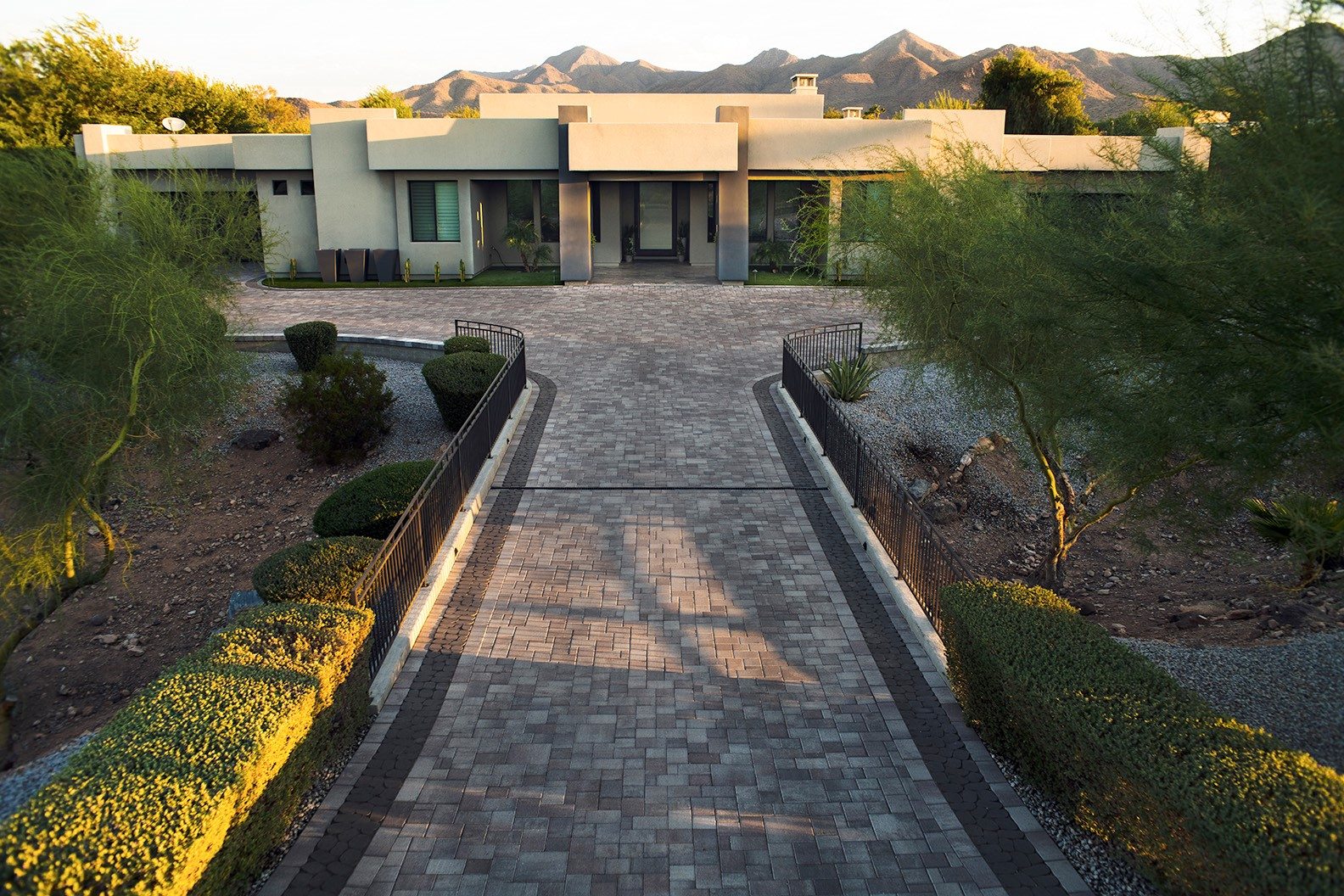
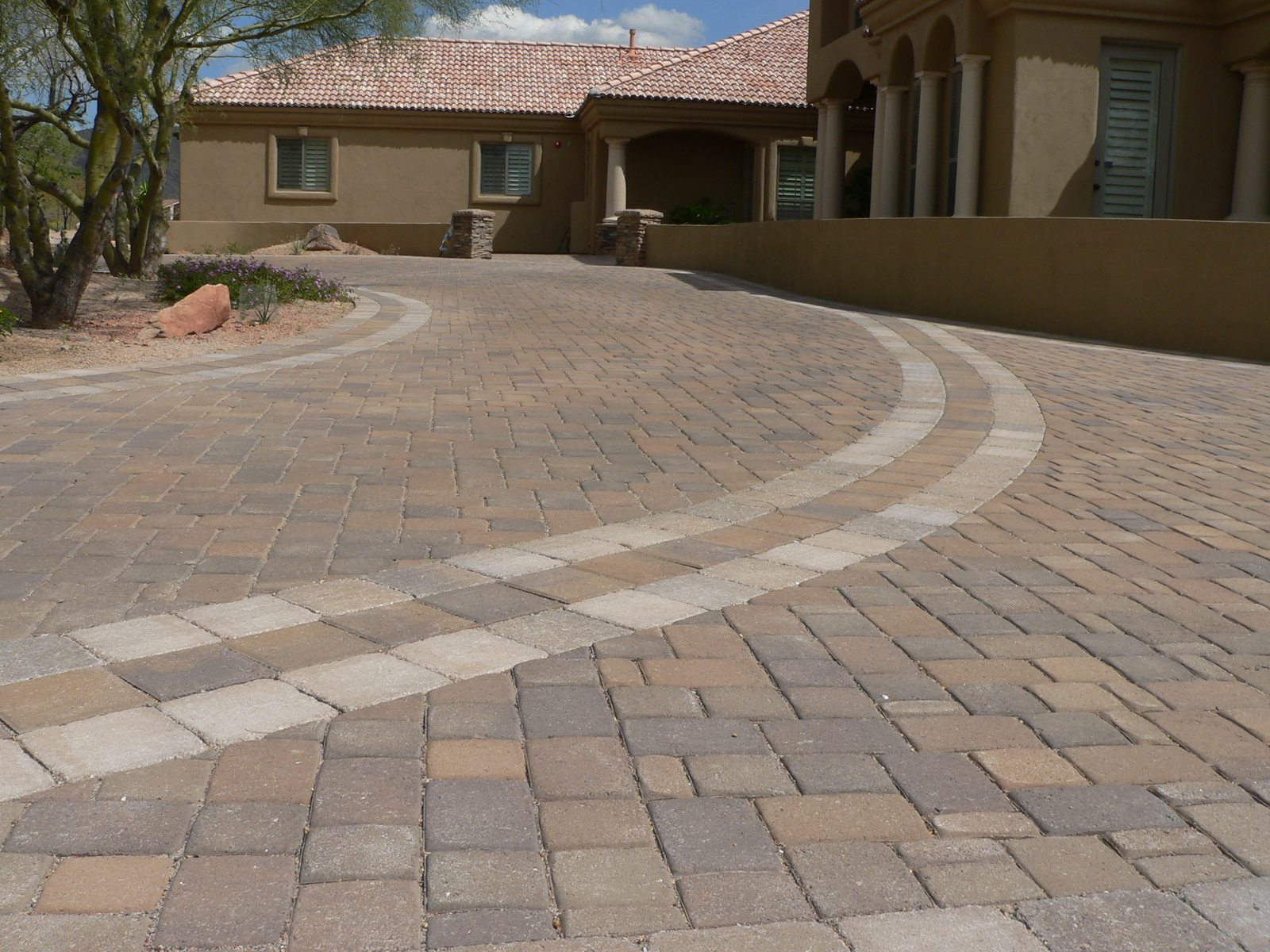
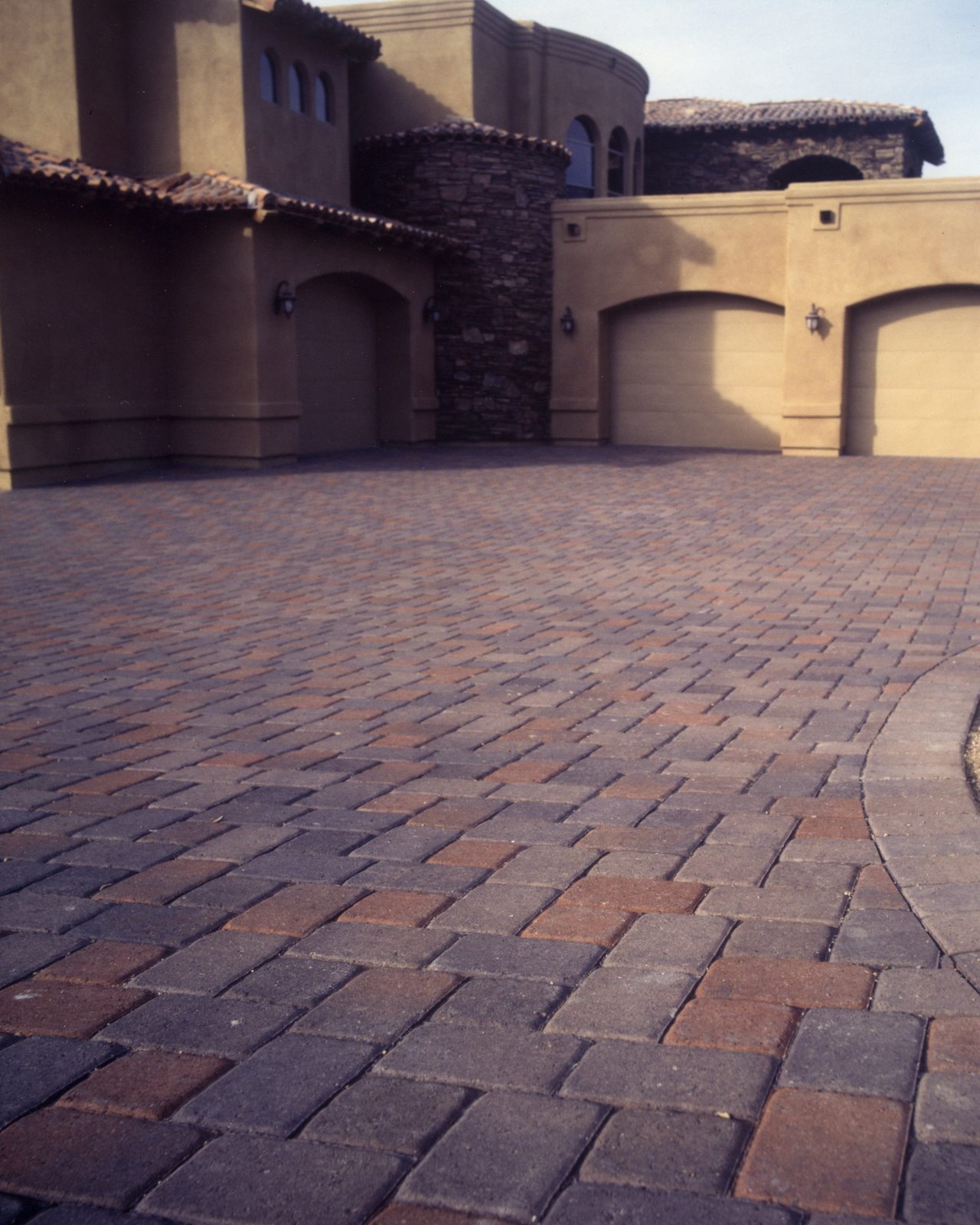
Real Stone Creations driveways
Is it worth it?
For most homeowners who want a driveway that looks good and holds up, yes. People choose pavers for the look, but they also perform better. You get a lot of colors and styles, and a paver driveway built on the right base lasts 30 years and adds real value to your house.
Here's the honest part. A paver driveway is only worth it if the base is done right. If the base is wrong, it isn't worth it at any price. That's why we explain our base on every quote, and why we can comfortably give a 10-year labor warranty after 25+ years in business, even though Arizona's Registrar of Contractors only requires 2.
Watch John explain it
Driveway pricing questions
Does the pattern change the price?
No. Herringbone, basketweave, running bond and random patterns all cost the same. A different border color or border paver is an add-on, not a pattern charge.
How long does a paver driveway take?
After you sign, we call in a blue stake so the utilities get marked, which usually takes about 3 days. If the pavers aren't in stock, they take 2 to 3 weeks to arrive. Once we start, excavation takes a day or two. A typical driveway goes in fast, while a bigger job with elevation changes can take 5 or 6 days.
Can I drive on it right away?
Yes. There's nothing to cure. You can drive on it as soon as we pull away.
What warranty do I get?
We give a 10-year labor warranty. Paver manufacturers' warranties vary, but most give at least 2 years on the product.
Will you give me a price without seeing the driveway?
Not a final one. Slope, caliche, drainage and tear-out all change the number. The instant estimate gives you a ballpark in a couple of minutes, and then we measure and give you a written quote.
Want the numbers for patios, pool decks and walkways too? See all of John's pricing.