
Services
Our Paver Services
Pavers and travertine are all we do. Every install is engineered for the Arizona climate, from base prep through final compaction.
What We Build
What Stone Creations Does
Stone Creations is a Scottsdale-based paver and travertine contractor, Arizona ROC #154361, working across Scottsdale, Phoenix, Paradise Valley, and the rest of the Valley. We install five things: paver driveways, paver patios, paver pool decks, paver walkways, and travertine. We also restore and re-level existing paver work that was installed on a bad base. We do not pour concrete, build pools, or take on general remodels. Narrowing the trade is what lets our crews get the base right every time.
Every project runs the same way: we measure and evaluate the site in person, quote a fixed scope, excavate to the depth the application calls for, compact an aggregate base, screed a one-inch bed of angular concrete sand, lay the field, cut the edges, set the restraint, and compact the surface with joint sand. The visible material is the part homeowners choose. The part underneath is what decides whether the job looks the same in fifteen years.
The Five Things We Install
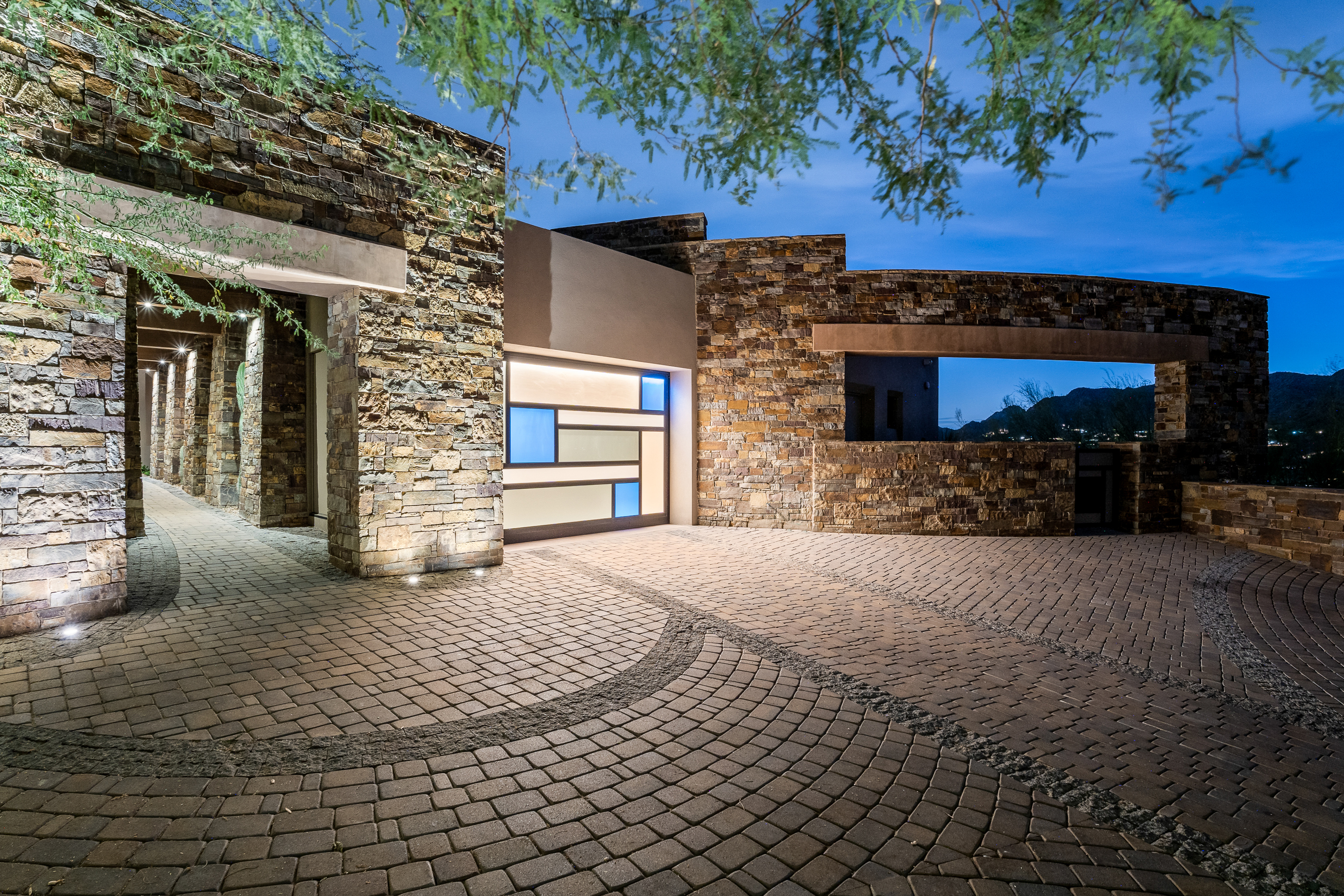
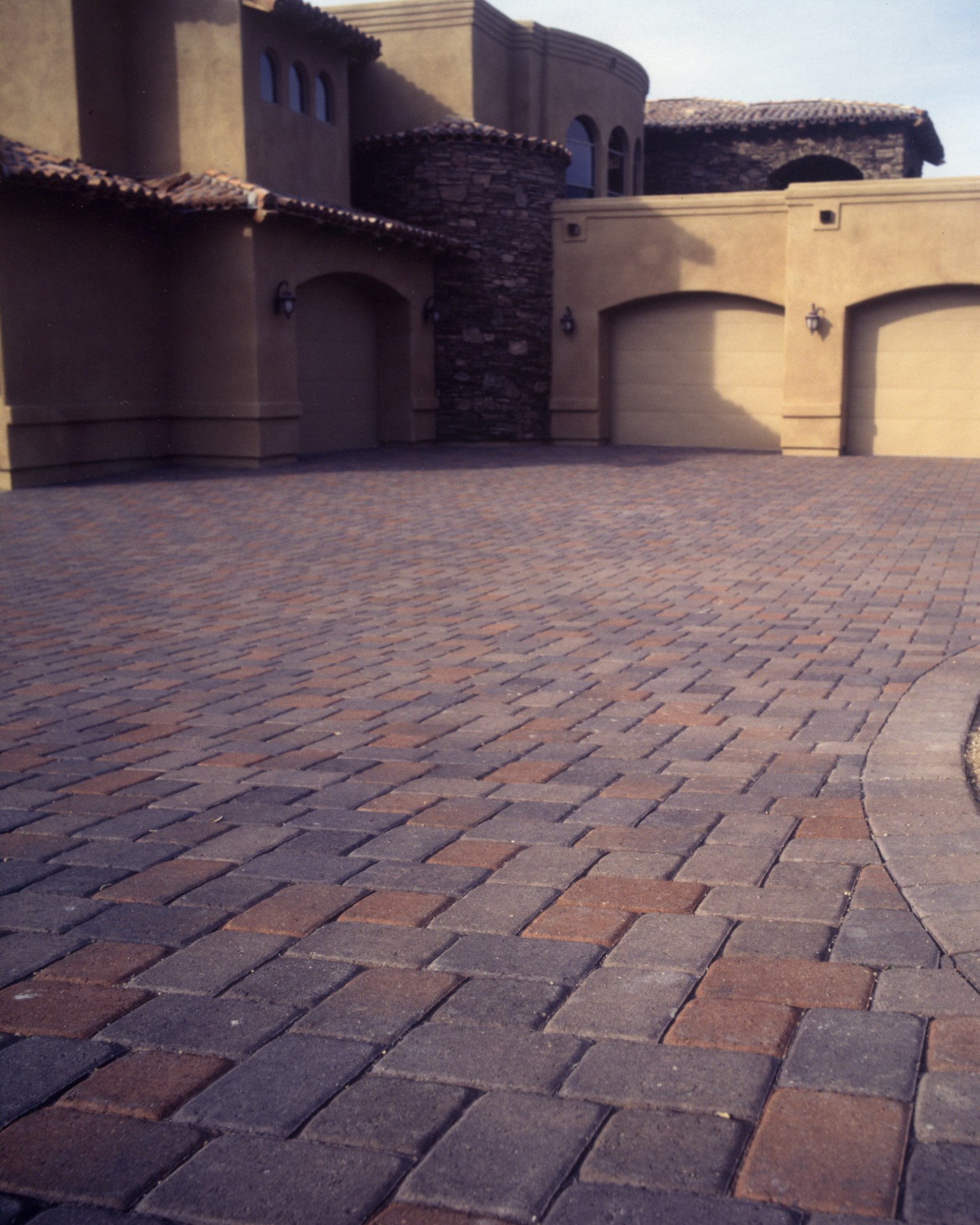
Paver Driveways
A driveway carries vehicle loads every day, so it gets the deepest base we build, typically six inches or more of compacted aggregate under the sand bed. Small-format pavers laid in a herringbone pattern spread wheel loads sideways instead of letting one unit take the hit, which is why herringbone is the standard for anything a truck parks on. Because the surface is segmented, a section that settles can be lifted, re-based, and reset without a visible patch.
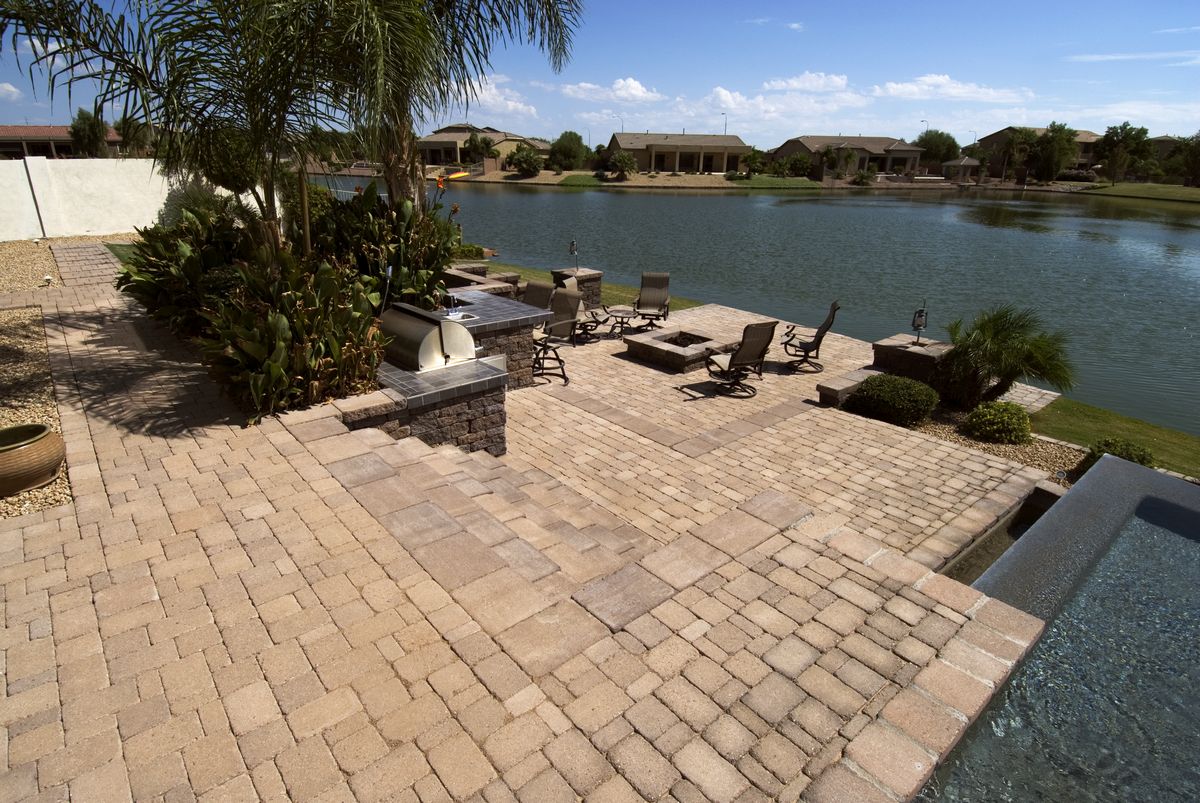
Paver Patios
Patios are where material choice matters most, because you are looking at the surface and walking on it barefoot. We slope every patio away from the house so monsoon runoff leaves rather than pools at the foundation, and we set an edge restraint on any side that is not held by a wall. Patios pair well with seat walls, built-in barbecues, and fire features, all of which are easier to plan before the base goes in than after.
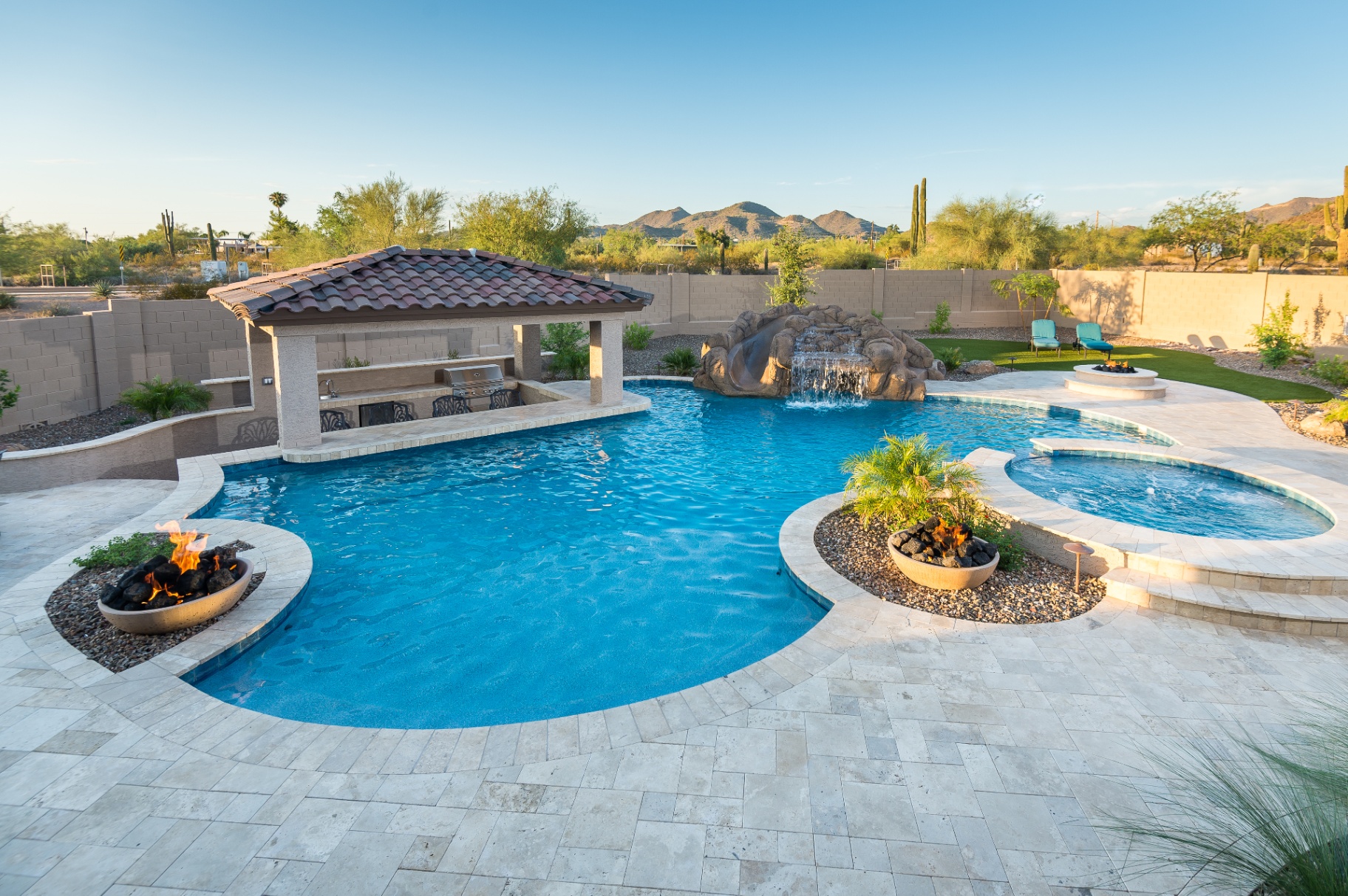
Paver Pool Decks
Around a pool, surface temperature decides whether the deck gets used in July. That is why we recommend travertine on nearly every Arizona pool deck we quote: it holds far less heat than dark concrete pavers and stays walkable barefoot in summer. Pool decks also need drainage planning and coping that matches the shell, and a segmented surface means a plumber can pull up units for a repair and put them back.
Paver Walkways
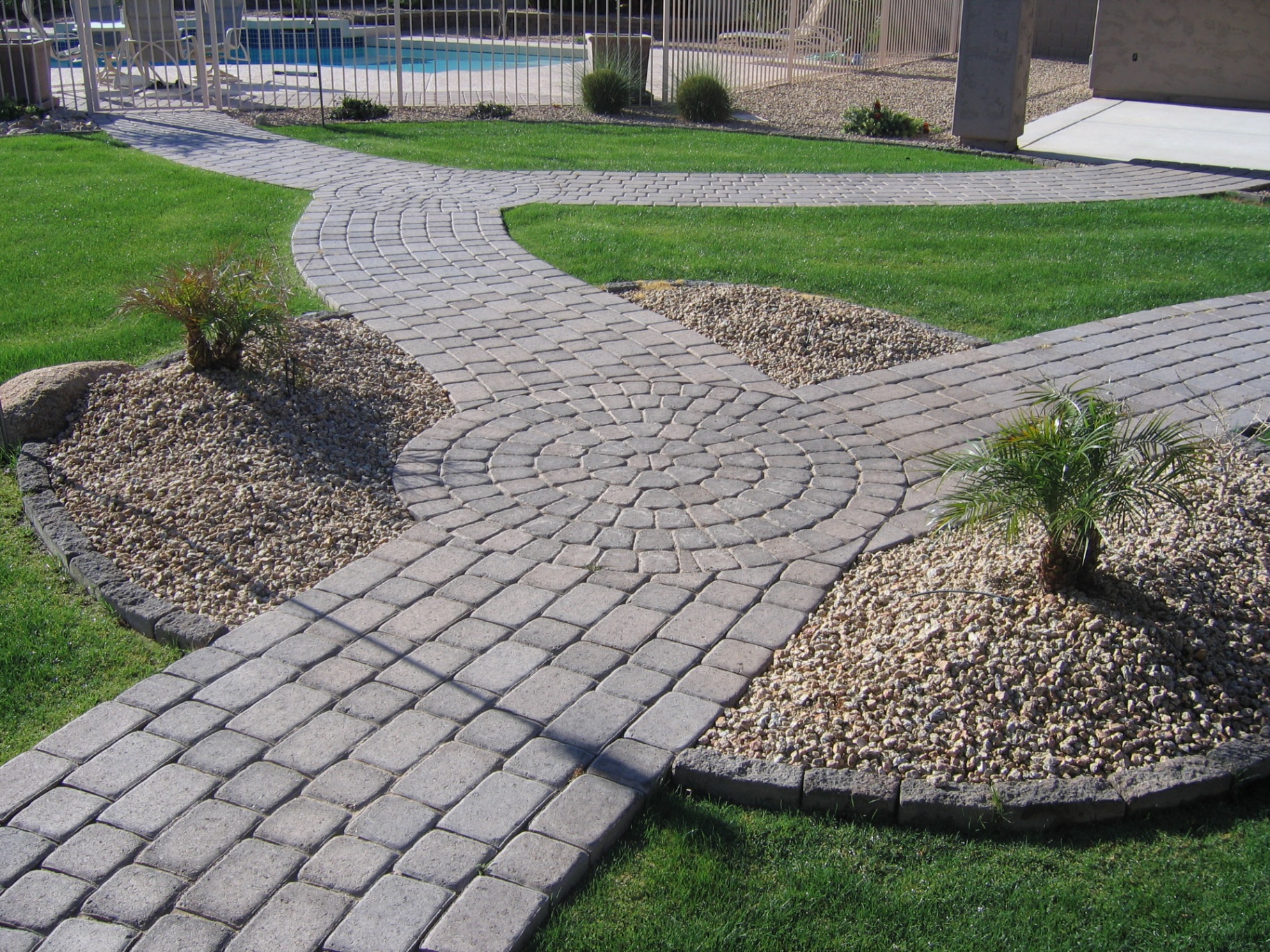
Walkways tie the driveway, the front entry, and the side yard together, and they are the smallest way to test a material before committing to a full backyard. Consistent step risers, correct joint width, and a compacted base under a path that gets irrigation overspray are the three details that separate a walkway that stays flat from one that rocks underfoot after two seasons.
Travertine Installation
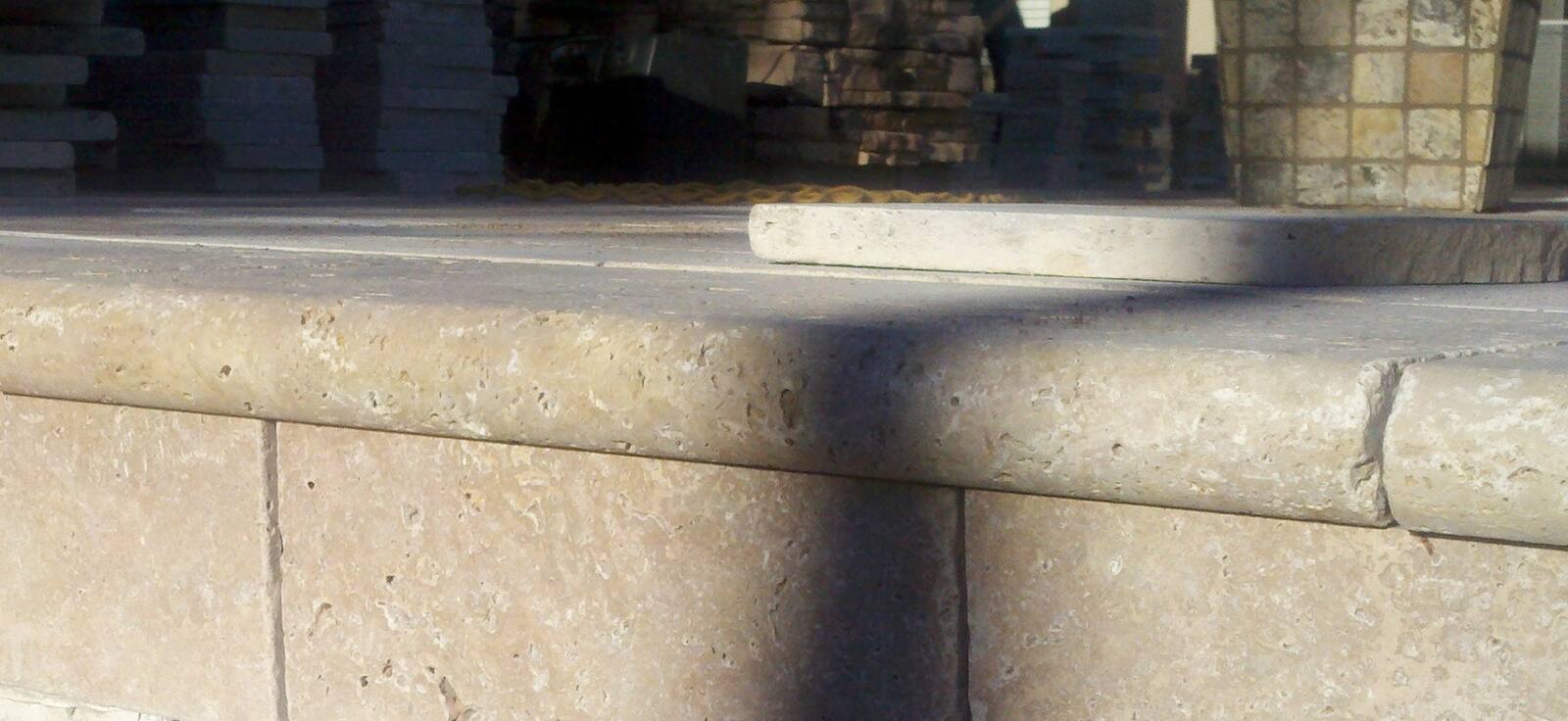
Travertine is the material we recommend for nearly every Arizona pool deck, and it works just as well on patios, walkways, and outdoor living areas where bare feet matter. It stays cooler under direct sun than concrete pavers, has a natural color variation that hides wear, and lasts decades when installed on the right base with periodic sealing. Because it is a natural stone, the installation requires tighter layout control and matching coping details, which is why we handle it as its own service rather than an add-on.
Why Pavers Suit Arizona Specifically
Valley soil moves. Caliche layers, expansive clay pockets, and a hundred-degree swing between a January night and a July afternoon all put slabs under stress they cannot relieve, so poured concrete cracks and the crack is permanent. A paver field is thousands of separate units sitting on sand. When the ground shifts, the joints absorb it. When something does go wrong, the fix is local.
Monsoon season is the other factor. Storms drop a lot of water in a short window, and a hard surface that sends all of it at the house is a problem. We grade for runoff and can specify permeable pavers with an open-graded base where a yard needs to take water in rather than push it somewhere else. Sun matters too: light travertine and light-bodied concrete pavers stay noticeably cooler than dark surfaces, which is worth more in Phoenix than almost any other design decision.
How the Installation Runs
- Site visit and measure. We walk the property, check drainage and existing grade, measure square footage, and talk through material options and what the space needs to do.
- Fixed written scope. You get a quote that names the material, base depth, square footage, demo, and edge detail, so there is nothing to interpret later.
- Demo and excavation. Old concrete or pavers come out and we dig to the depth the application requires. Driveways go deeper than patios.
- Base and compaction. Aggregate base rock goes in and gets compacted in lifts. This is the step that decides the lifespan of everything above it.
- Sand bed. One inch of angular concrete sand, screeded flat. Angular grains lock together; round mortar sand does not.
- Laying and cutting. Field pavers go in on pattern, then perimeter cuts, then edge restraint.
- Joint sand and final compaction. Sand is swept into the joints and the surface is compacted so each unit settles into the bed and locks against its neighbors. Cleanup, then walkthrough.
Compare Paver Materials
Seven material types side by side, with installed cost per square foot, heat behavior in Arizona sun, and maintenance for each.
View paver materialsWhere We Work
Scottsdale, Phoenix, Paradise Valley, Mesa, Chandler, Gilbert, Tempe, Queen Creek, Peoria, Glendale, Surprise, and Fountain Hills.
View service areas