
Paver Walkways
Create inviting and durable pathways through your outdoor spaces with paver walkways.
Starting Range
$2,000 – $10,000 / sq ft
About Our Paver Walkways Services
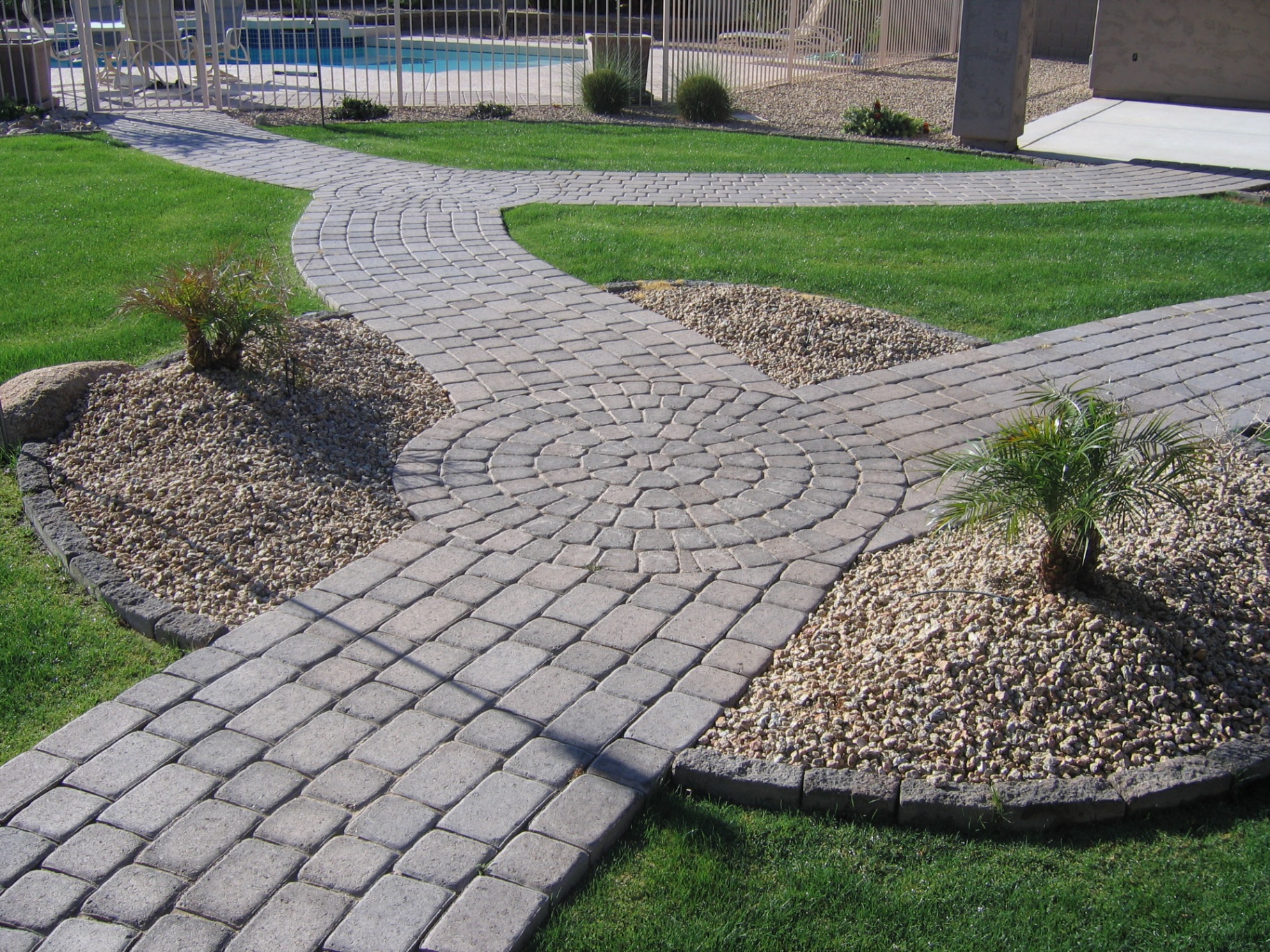
Paver walkways are paths constructed from individual interlocking paving stones, designed to guide foot traffic and enhance the aesthetics of your landscape. Unlike concrete slabs, pavers allow for flexibility and easier repair. They offer a diverse range of styles, colors, and textures to complement any home.
At Stone Creations of Arizona, we specialize in crafting beautiful and long-lasting paver and travertine walkways. We understand that a well-designed pathway not only adds curb appeal but also improves functionality and safety around your home. Our goal is to explain the process and costs clearly, helping you make an informed decision about your outdoor space.
Straight from the field:
In Arizona's heat and monsoon cycles, the difference between paver walkways that last 25 years and ones that fail in 5 is almost always the base prep underneath, not the pavers themselves. We over-build the base every time.
Have questions before you commit? We're happy to talk through it.
How Much Does Paver Walkways Cost?
Prices typically range from $15 to $35 per square foot, depending on materials and design complexity.
We give you an upfront quote before any work starts.
What's Always Included
Want a more precise number for your specific situation?
Use our free estimator, it takes about 90 seconds.
What Affects the Price?
Our Paver Walkways Work
All photos are from real jobs completed by our team.
What Are My Options?
Good
Foundation Walkway
$15-$22/sq ft
- Standard concrete pavers (e.g., tumbled, Dutch)
- Simple straight-line design
- Basic sand jointing
- Effective drainage
Better
Enhanced Walkway
$22-$28/sq ft
- Premium concrete pavers (e.g., permacon, Belgard)
- Gentle curves and subtle design elements
- Polymeric sand jointing (inhibits weeds & insects)
- Integrated border (single row)
Best
Custom Design Walkway
$28-$35+/sq ft
- Travertine pavers or premium interlocking concrete pavers
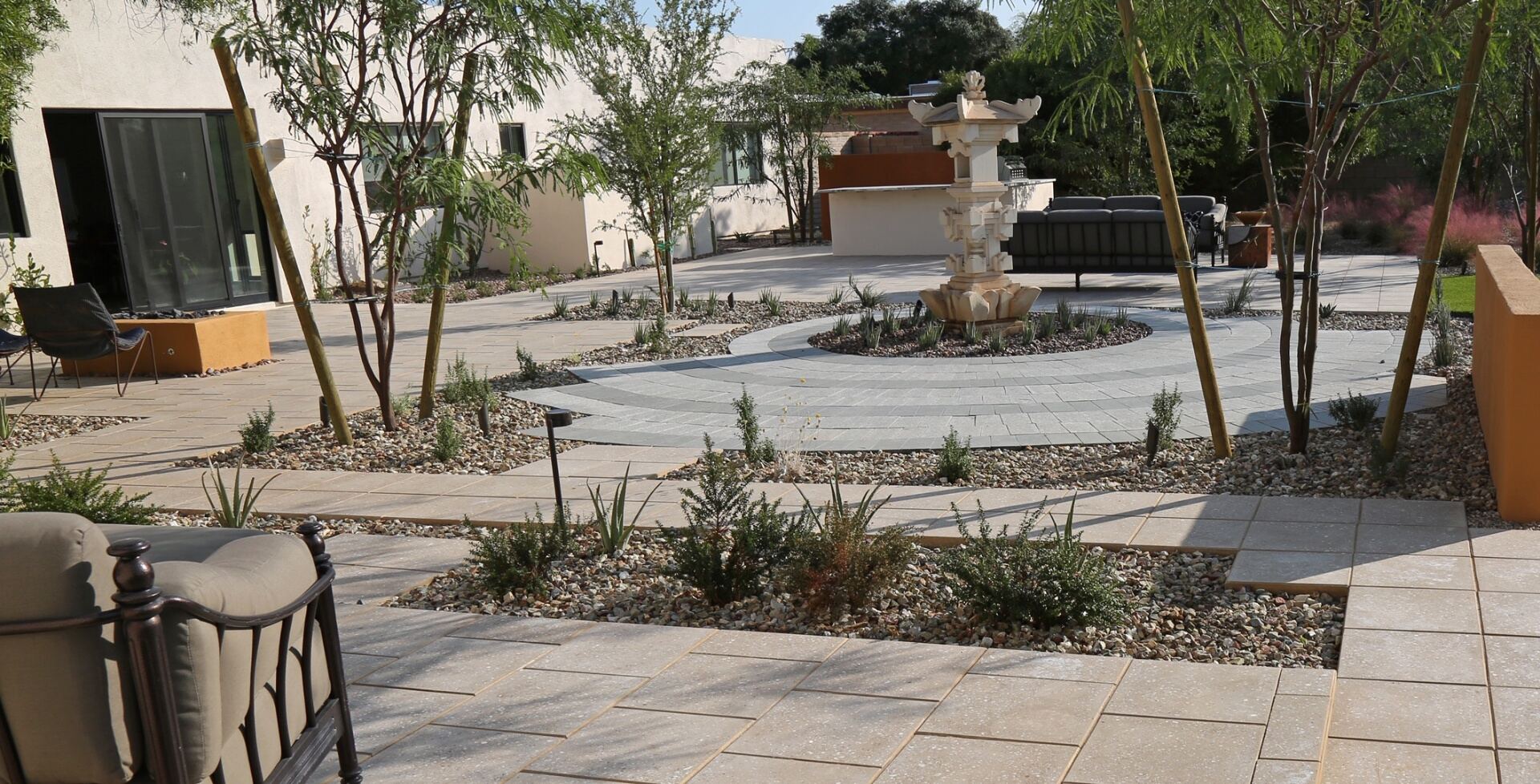
- Intricate custom designs (e.g., multiple colors, patterns, inlays)
- Polymeric sand jointing with sealer application
- Multi-row or decorative border, lighting integration options
Not sure which tier fits your situation? The estimator can help.
What Should You Know About Paver Walkways?
Travertine Pavers
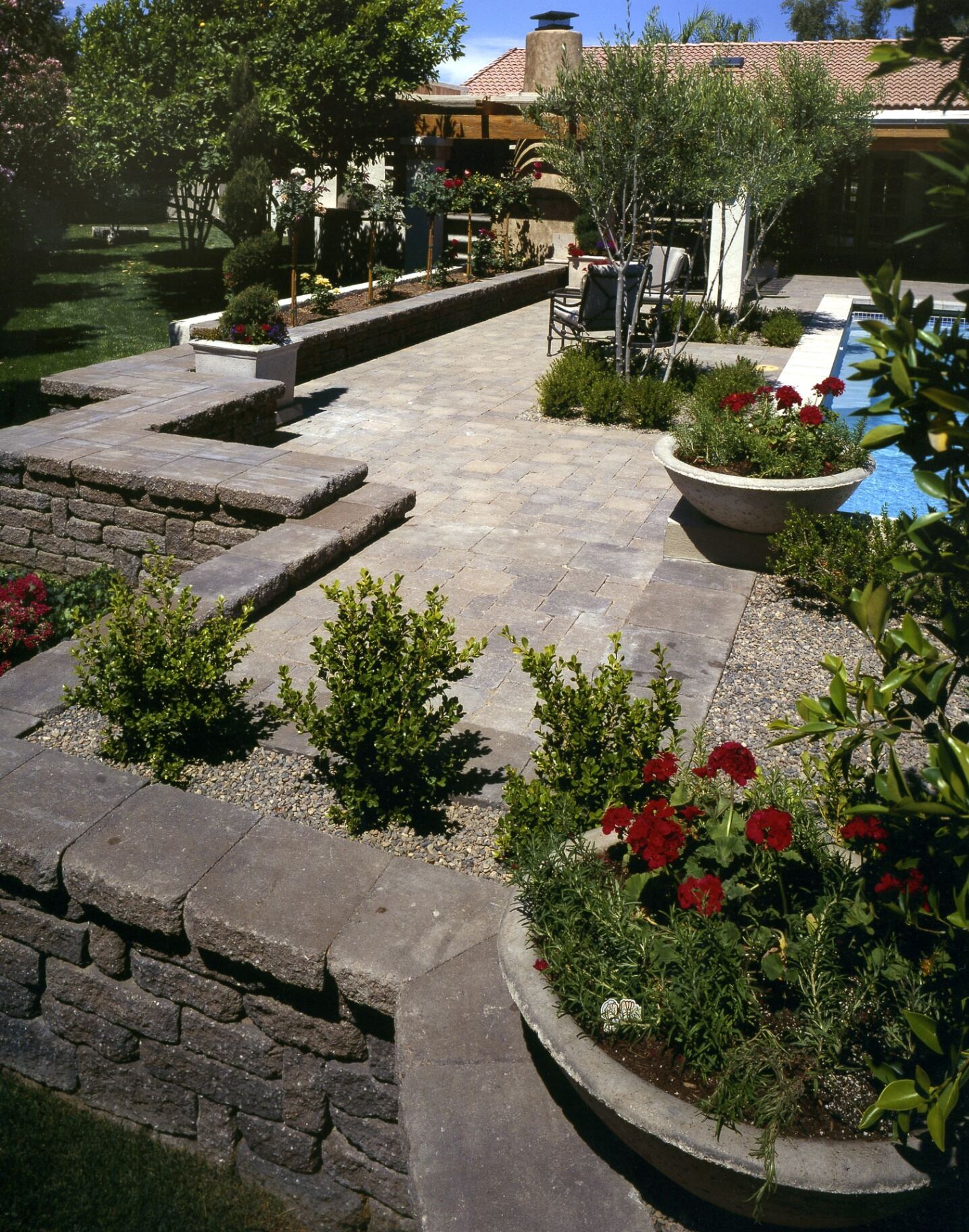
Travertine is a natural stone known for its elegant appearance, slip-resistance, and natural cooling properties, making it excellent for Arizona's heat. It's a premium material that adds significant value and beauty.
Polymeric Sand Jointing
Unlike regular sand, polymeric sand contains binders that solidify when wet, creating a strong, flexible bond between pavers. This significantly reduces weed growth, insect infestation, and erosion from rain.
Integrated Pathway Lighting
Adding low-voltage LED lighting along your walkway enhances safety, especially at night, and highlights the beauty of your pavers and landscaping. It's both functional and aesthetically pleasing.
Custom Patterns & Inlays
Beyond standard layouts, we can create intricate patterns, weave in contrasting paver colors, or even incorporate decorative inlays (like unique shapes or designs) to make your walkway truly unique and a focal point.
Paver Sealing
Applying a high-quality sealant protects your pavers from stains, UV damage, and erosion. It also enhances their color, adds a subtle sheen, and makes cleaning easier, prolonging the life and vibrancy of your walkway.
Paver Walkways: Guides Worth Reading First
Short, practical write-ups from our own job sites on the details that decide how a paver walkways project holds up in Arizona.
String Lines, Grading, and Why Your Paver Job Starts Before the First Paver
Layout and grade control on narrow walkway runs.
Read the GuideConsistent Steps, Elevations, and How Water Decides Where Stairs Go
Keeping step risers consistent along a sloped path.
Read the GuideHidden Features That Make Outdoor Spaces Safer & Smarter
Lighting, edging, and details that make walkways safer.
Read the GuideWhy We Leave Gaps in Paver Installations (On Purpose)
Joint spacing and long-term stability.
Read the GuideHow Does Paver Walkways Compare?
Pavers vs. Poured Concrete Walkways
Pavers
- Flexible, less prone to cracking (interlocking stones adjust to ground movement)
- Easy to repair individual sections without demolishing entire path
- Wide variety of colors, textures, and patterns for aesthetic versatility
- Better drainage as water can permeate joints
Poured Concrete
- Generally lower initial cost (for basic concrete)
- Offers a seamless, monolithic look (can crack significantly if not properly prepared)
- Can be quicker to install for large, simple areas
- Limited aesthetic options unless stamped/stained
Our take: Pavers are generally better for long-term durability, aesthetic customization, and easier repairs. While often a higher initial cost, their flexibility and repairability usually make them more cost-effective over time. Concrete is a lower upfront cost but can be more expensive to repair when cracking occurs.
Concrete Pavers vs. Travertine Pavers
Concrete Pavers
- Extremely durable and long-lasting
- Wide range of manufactured colors, shapes, and sizes
- Generally more affordable than natural stone
- Consistent quality and color due to manufacturing process
Travertine Pavers
- Natural stone with unique, elegant appearance and varying tones
- Excellent heat dissipation, cooler underfoot in direct sun
- Naturally slip-resistant when wet due to porous surface
- Higher initial cost and can be more porous (requiring sealing)
Our take: The better choice depends on your budget, aesthetic preference, and climate considerations. Concrete pavers offer versatility and affordability with excellent durability. Travertine provides a luxurious, natural look and superior comfort in hot climates due to its cooling properties, but at a higher price point.
Dry-Laid vs. Mortar-Set Pavers (for Walkways)
Dry-Laid Pavers
- Pavers are set on a compacted aggregate base and sand, joints filled with sand (polymeric or regular)
- Allows for flexibility with ground movement, reducing cracking risks
- Easier and less costly to repair individual pavers
- Better for drainage as water can filter through joints
Mortar-Set Pavers
- Pavers are set onto a concrete slab using thin-set mortar, with mortar joints
- Creates a rigid, permanent surface, often used for steps or entryways where rigidity is needed
- Less flexible, can lead to cracking if the underlying concrete slab cracks
- More difficult and costly to repair individual pavers
Our take: For walkways, dry-laid pavers are almost always the superior choice. Their flexibility allows them to adapt to ground movement in Arizona, preventing cracks that are common in rigid, mortar-set systems. Mortar-set is typically reserved for specific applications like steps or vertical elements where a solid, fixed surface is essential.
Frequently Asked Questions
Ready to Move Forward?
Paver Walkways by City
See how we handle paver walkways in your part of the Valley, soil, permits, HOA notes, and local projects.
Keep Exploring
Plan Your Paver Walkways Project
Compare paver materials, browse other services, or see paver walkways in your city.