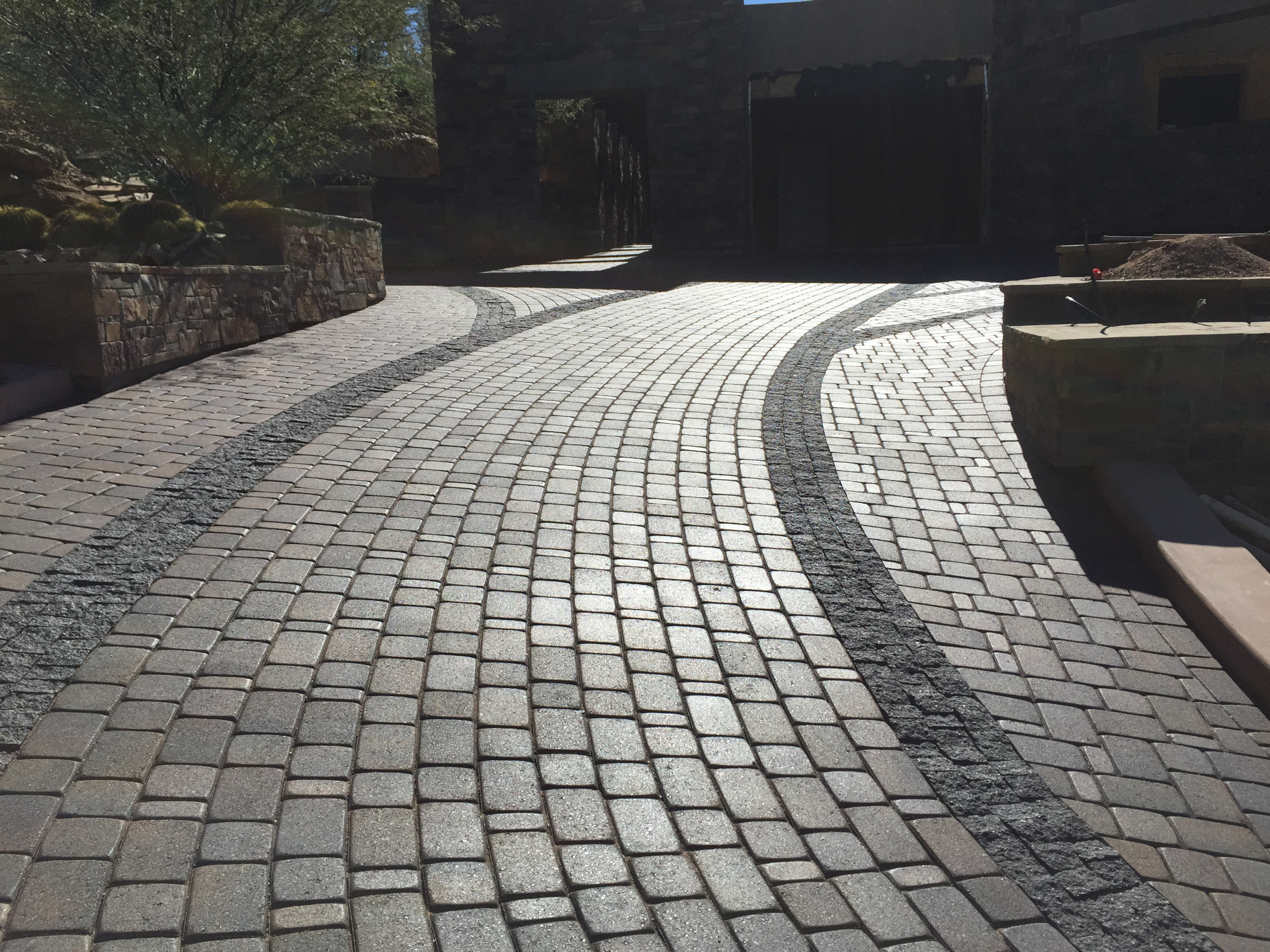
Why the Sand Under Your Pavers Matters
August 14, 2026
People talk about the pavers themselves all day long. They want to know the color, the pattern, the price per square foot. But nobody asks about the sand. And that is a mistake, because the sand layer is doing a lot of the work.
What Goes Under the Pavers
After we get the ABC compacted and graded, we put down one inch of sand. Not two inches. Not half an inch. One inch. That is the bedding layer the pavers actually sit on.
Concrete Sand, Not Mortar Sand
We use concrete sand for this layer. The reason is the shape of the grains. Concrete sand is angular. The pieces have edges and corners that lock against each other.
Mortar sand is rounder. It is also called masonry sand sometimes. Those rounded grains roll past each other like ball bearings. That is fine for mixing mortar, but it is not what you want under pavers that are going to take weight from cars, trucks, furniture, and foot traffic.
How It Locks Everything Together
We screed that one inch of concrete sand flat, lay the pavers on top, and then run the compactor over the whole surface. The compactor vibrates the pavers down into the sand. They settle in maybe an eighth of an inch or so.
As the pavers push down, the angular sand particles shift and interlock around the bottom edges of each paver. That is what creates the friction and stability. The whole field starts acting like one solid surface instead of hundreds of loose pieces.
What Happens With the Wrong Sand
If you use mortar sand or any soft, rounded bedding material, you lose that interlock. The pavers can shift, rock, or settle unevenly over time. You start getting low spots, wobbly stones, and water pooling in places it should not.
It might look fine the day the job is done. The problems show up after the first monsoon, or the first summer when the ground moves a little.
One Inch Is Enough
Some homeowners think more sand is better. It is not. If the sand layer is too thick, the pavers can sink too far under compaction and you lose your grade. Too thin, and you do not get full bedding contact. One inch gives you the right balance.
The Bottom Line
The sand under your pavers is not just filler. It is the connection between the hard pavers and the compacted base. Use the right sand, screed it flat, compact the pavers into it, and you get a surface that stays flat and locked together for years.
Want to see what happens before the sand goes down? Read about the base every strong driveway needs.
Curious what your project might cost?
Get an instant ballpark with our free estimator tool, no contact info required.