
Free Estimator
Get a Free Project Estimate
Answer a few quick questions and we'll give you a ballpark cost range in under 2 minutes. No phone call needed.
This is a rough estimate based on typical projects. Exact pricing depends on a site visit — every project is different. We give free, no-obligation quotes with no pressure.
What the Estimator Covers
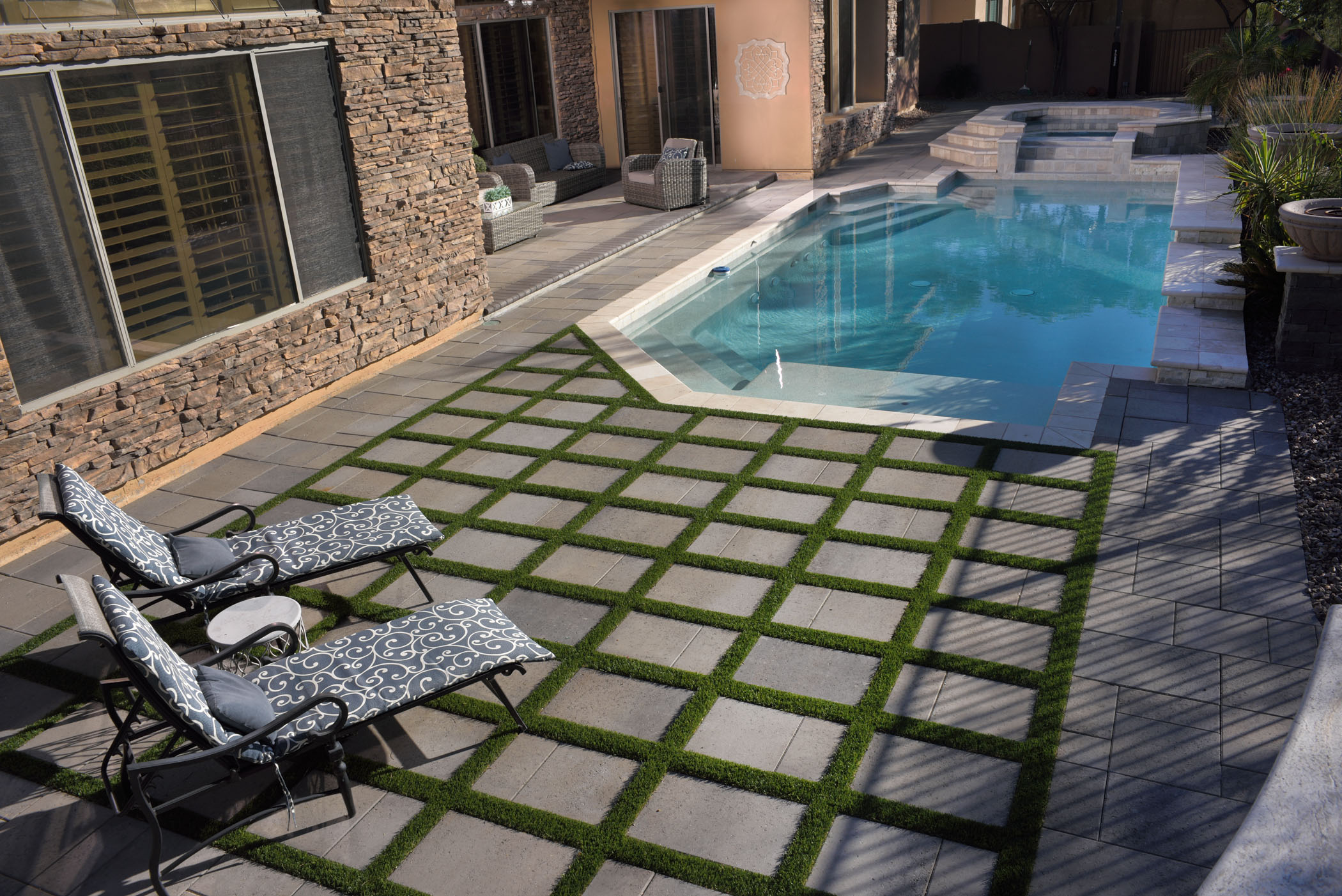
The tool prices the four things we install: paver driveways, paver patios, paver pool decks, and paver walkways, in concrete pavers, travertine, natural stone, and porcelain. You give it the approximate square footage, the surface type, the material you are leaning toward, and whether there is existing concrete or pavers to remove. It returns an installed cost range for that scope in the Phoenix and Scottsdale market. It is a range, not a bid. Nobody can quote a hardscape job accurately without standing on the site.
How the Number Is Produced
The ranges come from our own recent jobs in the Valley, not from a national average. Each material carries a per-square-foot installed rate that already includes excavation, compacted aggregate base, the one-inch bed of angular concrete sand, laying and cutting, edge restraint, joint sand, final compaction, and cleanup. The tool then adjusts for surface type, because a driveway needs a deeper base than a patio of the same size, and adds a demo line when there is an old slab to break out and haul. Larger areas price lower per square foot than small ones because mobilization and setup are spread across more work.
What Moves Paver Pricing in Arizona
- Square footage. The single biggest input, and the per-foot rate drops as the area grows.
- Material. Standard concrete pavers sit at the bottom of the range. Travertine, natural stone, and large-format porcelain sit well above it.
- Base prep. Driveways need six inches or more of compacted aggregate; a patio needs less. Caliche or soft soil can force a deeper dig than planned.
- Demolition. Removing and hauling an existing concrete slab adds real cost, and a slab with rebar or wire mesh adds more.
- Drainage. Re-grading, channel drains, dry wells, or a permeable open-graded base all add scope beyond the paver field itself.
- Access and cuts. A backyard reachable only through a narrow gate means wheelbarrows instead of equipment. Curves, borders, and inlays mean more saw cuts and more waste.
What the Tool Cannot Account For
It cannot see your site. It does not know your existing grade, how water currently moves across the yard, whether there is caliche eighteen inches down, whether the pool coping has to be pulled and reset, where irrigation and low-voltage lines run, or whether an HOA has material restrictions. It also does not price seat walls, fire features, built-in barbecues, steps, retaining walls, lighting, or artificial turf. Those come out of a site visit. Use the estimator to find out whether your project is a ten-thousand-dollar job or a forty-thousand-dollar one, then have us come out and put a fixed number on it.
For a fuller breakdown by project type, see the pricing guide or compare paver materials before you run the numbers.