Why Some Paver Driveways Last 30+ Years
April 21, 2026
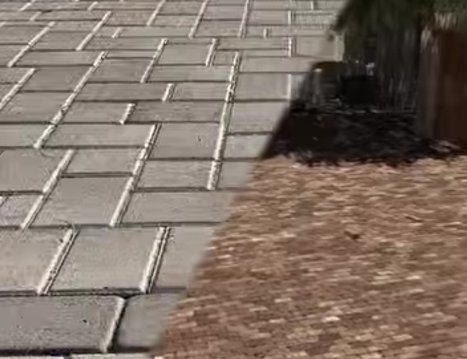
We''ve done driveways that we go by years later and they still look great. No sinking, no waves, no shifting around the edges. They look almost the same as the day we finished them.
But here''s the thing, that only happens if it''s done right. Pavers themselves don''t fail. The base under them does. The edges do. The install does. So when people ask me why some paver driveways last 30+ years and others start falling apart in two, the honest answer is almost always the same: somebody skipped a step.
Let me walk you through what actually matters.
If You Put Sand on Dirt, It''s Going to Fail
I see this all the time. Somebody comes in, scrapes off a little grass, throws down a layer of sand, and starts laying pavers right on top. It looks great for about a season.
Then the rain comes. The dirt underneath moves. The sand washes around. The pavers start to dip, tilt, and separate. Now you''ve got a driveway that looks like a wave pool, and the only fix is to tear the whole thing out and start over.
Dirt is not a base. Sand is not a base. A driveway holds cars, sometimes trucks, sometimes a loaded trailer, and that weight has to land on something that won''t move when it gets wet or hot or cold. In Arizona that matters even more, because our soil swells and shrinks with the monsoons.
The Right Way: ABC, Sand, Edges, Compaction
When we build a driveway that''s going to last, we''re really doing four things in the right order. None of them are flashy. All of them matter.
1. Excavate and Lay Down ABC
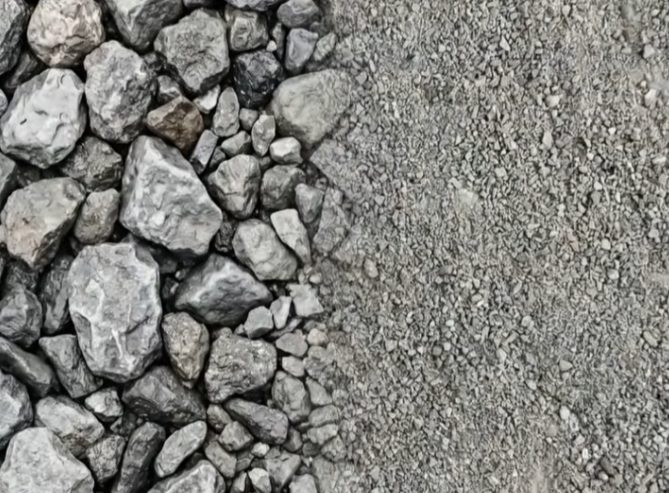
ABC stands for aggregate base course. It''s a crushed rock blend, a mix of different stone sizes that lock into each other when you compact it. That''s the foundation. For a driveway, we''re going down deep enough to handle vehicle weight, then putting that ABC in lifts and compacting each lift with a plate compactor.
When it''s done right, you can walk on it and it feels like concrete under your feet. That''s the surface that''s actually carrying your truck, not the pavers.
2. Set the Sand Bed
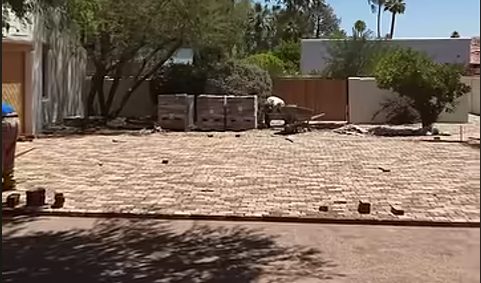
On top of the compacted ABC, we lay a thin, screeded layer of bedding sand. Not a thick cushion, just enough to seat the pavers evenly. The pavers don''t float on the sand, they just settle into it so each one sits flat and level with the next.
If you skip the ABC and just dump a deep sand bed on dirt, you''re building on a sponge. It''ll move every time the soil does.
3. Install Edge Restraints
This is the step homeowners almost never see, but it''s the one that holds the whole driveway together. Edge restraints are what keeps the outside row of pavers from drifting outward over time.
Every time a tire rolls across pavers, it pushes them sideways a tiny amount. With no edge restraint, those tiny pushes add up over years until the outer pavers spread apart and the joints in the middle open up. With a proper edge restraint pinned into the base, none of that happens.
4. Compact the Pavers
Once the pavers are set and the polymeric sand is swept into the joints, the whole driveway gets compacted again with a plate compactor, usually with a rubber pad or roller pad on the bottom so we don''t scuff the surface. That locks every paver into the bedding sand and pushes the joint sand all the way down.
After that, we top off the joints, sweep, and call it a driveway. And that''s the driveway that''s still going to look right in 30 years.
What This Means for You
If you''re getting bids on a paver driveway, ask the contractor what they''re putting under it. How deep are they excavating? What base material are they using? Are they compacting in lifts? Are they installing edge restraints?
If they shrug or say "we just throw down some sand and lay pavers", that''s your answer. Walk away.
A paver driveway is one of the few things you can put in front of your house that actually gets better looking over time. But only if the part you can''t see is built right.
That''s the whole secret. There''s no magic paver. There''s just doing the work the right way, the first time.
Curious what your project might cost?
Get an instant ballpark with our free estimator tool, no contact info required.