Why We Leave Gaps in Paver Installations (On Purpose)
May 15, 2026
When folks see one of our patios up close for the first time, they almost always ask the same thing: "Why are there gaps between some of those pavers?" Looks like a mistake, right? It's not. Those gaps are one of the most important details on the whole job, and today I want to walk you through exactly why we put them there on purpose.
The Three-Piece Pattern (And Why It Matters)
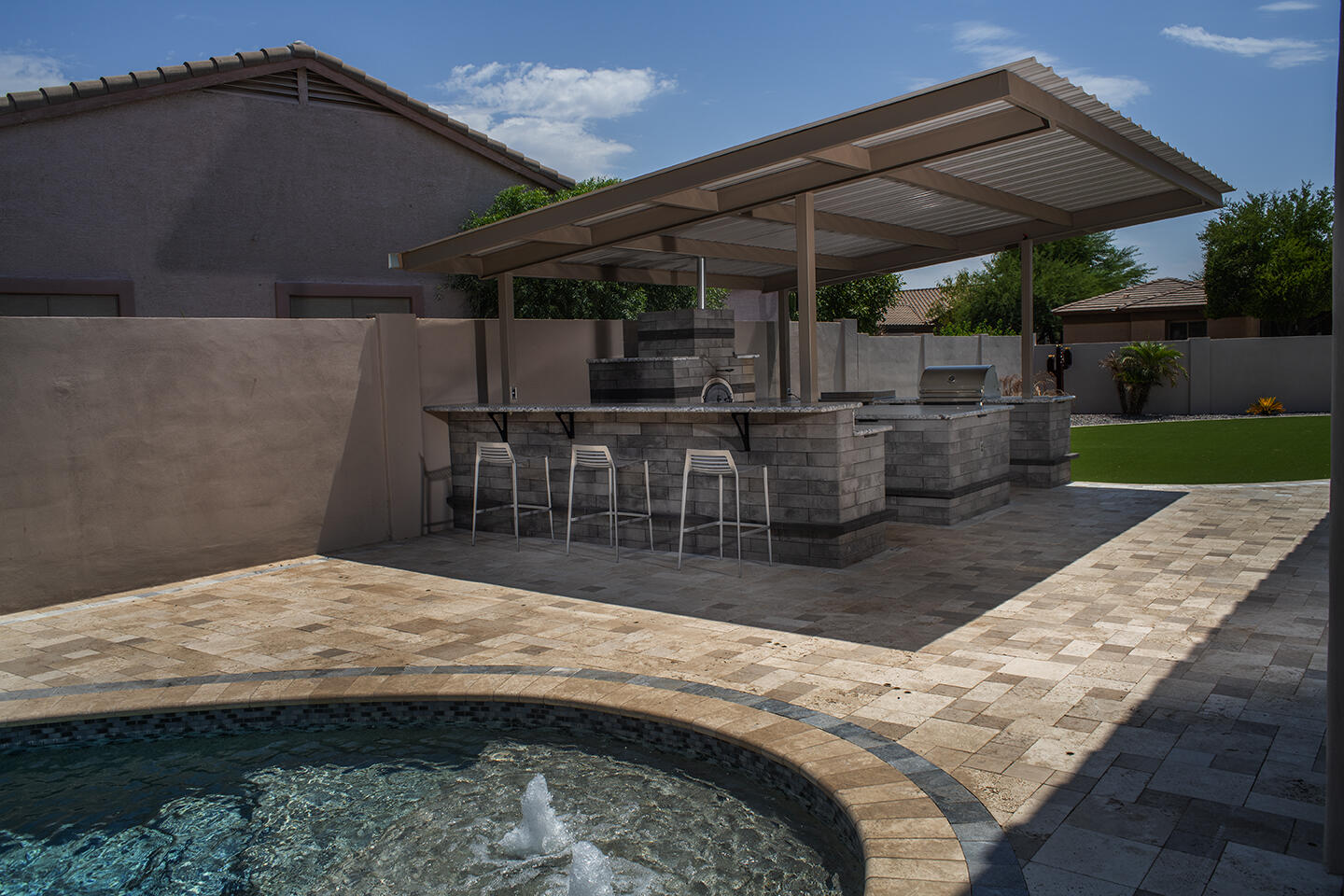
This patio you're looking at, we did it as a three-piece pattern. You've got a 16x16, a 12x12, and an 8x12 all working together. That mix isn't just for looks, although it does look great. One of the nice things about running a three-piece pattern is that you end up with a lot more individual joints across the surface.
That matters more than people realize. When you've got kids running around, dogs chasing each other, people coming out of the pool with wet feet, all those little joint lines actually give your foot extra grip. A big slab with no joints can get slippy fast, especially when it's wet. Those joint lines break up the surface and give you traction where you need it.
So before we even get to drainage, the pattern itself is doing work. It's grippier, it's more interesting to look at, and it hides wear better over time.
"It Doesn't Rain in Arizona", Yeah, Right
I hear it all the time. Somebody will say, "Why are we even worrying about drainage? It doesn't rain in Arizona." And I get it, we're in the desert. But here's the thing: if it rains one time and it's done wrong, it can ruin everything. One bad monsoon storm can lift pavers, push water against your house, flood a patio, and undo a lot of expensive work.
We've seen it. Somebody's neighbor poured a slab or laid pavers without thinking about where the water goes, and a year later they're calling us out to fix it. Drainage is one of those things you can't see when the job's done, but you sure can see it when it fails.
That's why every time we come out, drainage is one of the first things we plan around. Not the last. The first.
The 3/8 Inch Gap, Explained
So what you're looking at on this job, those gaps you can see between sections of the patio, those are 3/8 inch on purpose. Both sides of that gap are cemented in solid, so the pavers around it aren't going anywhere. The gap itself is a channel.
Here's how it works. When water hits the surface of the patio, it needs somewhere to go. It can't just sit there, and you don't want it running back toward the house. So we slope everything just slightly toward those gaps. The water flows down the surface, drops into the gap, and then runs along the gap toward the side of the patio. From there, it hits a drain we've already hooked up, and it gets carried away from the house and the slab.
It's a hidden drainage system, basically. From across the yard you just see a beautiful patio. Up close you see those clean little lines. But underneath, those lines are doing the same job a gutter does on your roof.
What to Ask Before You Hire Anyone
If you're shopping around for a paver job here in the Phoenix area, ask the contractor a few things before you sign anything:
- "Where is the water going to go when it rains?" If they shrug or say it doesn't rain enough to matter, walk away.
- "Are you building in any drainage channels or gaps?" There's more than one way to do it, but they should have an answer.
- "How are you tying it into the existing drainage on the property?" Gutters, downspouts, side yards, it all has to flow somewhere.
- "What pattern are you using and why?" The pattern affects grip, looks, and how the surface ages.
A good installer plans the drainage before they plan the pretty part. The pretty part is easy. Making sure your patio is still flat, dry, and grippy ten years from now, that's the part that takes experience.
The Bottom Line
Those gaps you see on our jobs aren't gaps because we ran out of stone or because somebody got lazy. They're gaps because we want your patio to last. Three-piece pattern for grip and good looks, 3/8 inch channels for drainage, cemented in solid on both sides, all tied into a real drain on the side of the patio. That's how you build something that holds up to Arizona, sun, monsoons, kids, dogs, and everything else.
If you're thinking about a new patio or pool deck and you want it done right the first time, give us a call. We'll come out, look at your space, and lay out a plan that handles the water before we ever talk about the stone.
Curious what your project might cost?
Get an instant ballpark with our free estimator tool, no contact info required.