
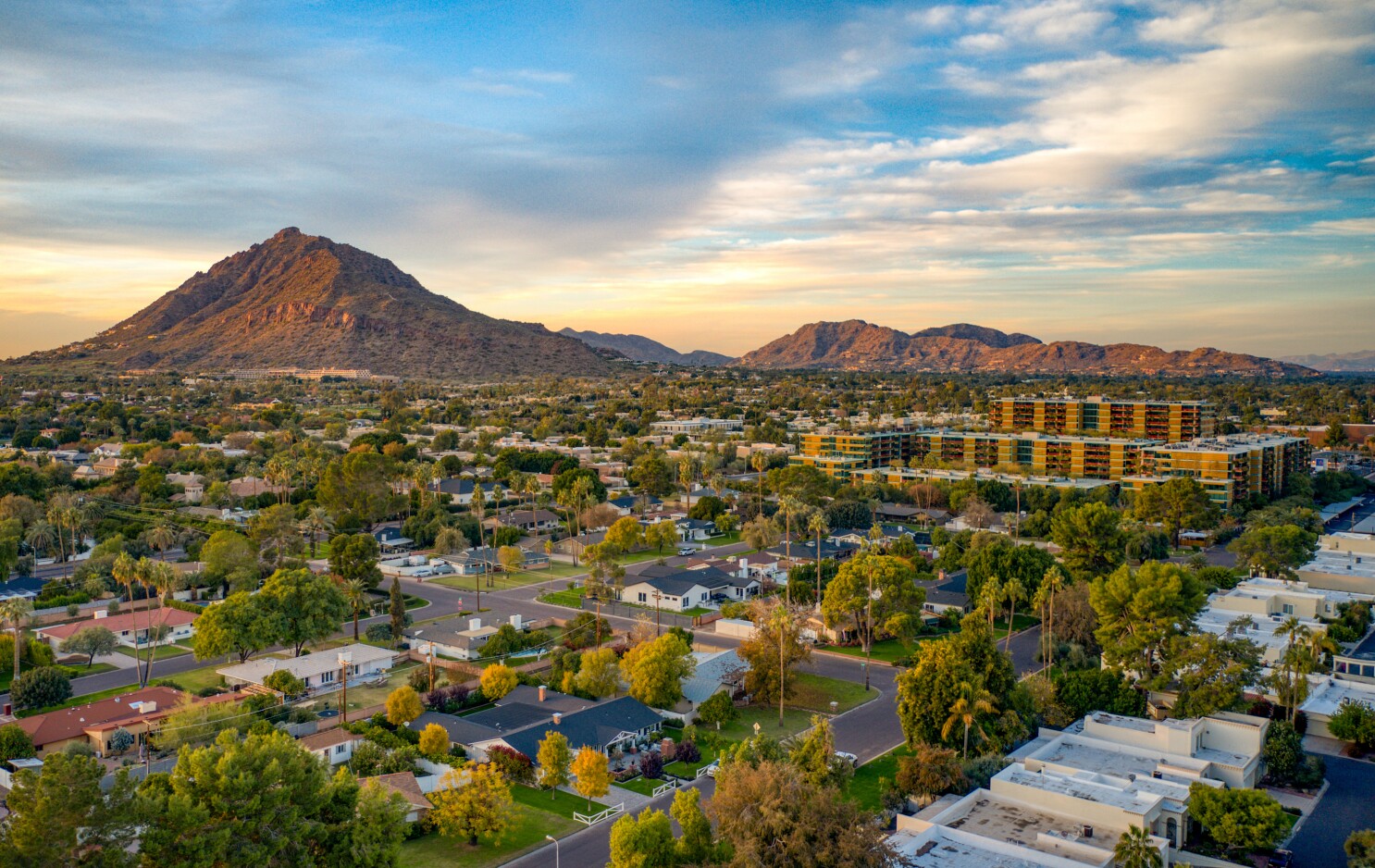
On an acre lot, walkways are how you get around. They run from the motor court to the front door, around the house to the pool, and out to a fire pit or a side gate. In Paradise Valley those paths are often longer than a typical walkway, and on hillside lots they turn into steps. The material usually follows the driveway or the pool deck so the property reads as one design.
Paver walkway costs on a Paradise Valley lot
For a walkway in the usual 100 to 250 square foot range, installed totals run:
- Concrete pavers: $850 to $2,750
- Natural stone or travertine: $1,500 to $4,500
- Porcelain: $1,900 to $5,500
The minimum job is $800. Longer paths cost more because they cover more ground, and steps, borders and old concrete removal get priced when we measure. (Side note: concrete paver walkways work out to roughly $8.50 to $11 per square foot at typical sizes.)
Here's a worked example. A 4-foot-wide entry walk from the motor court to the front door, 60 feet long, is 240 square feet. In travertine, that's near the top of the walkway range, about $3,600 to $4,500. The same walk in concrete pavers runs about $2,050 to $2,750. Your exact total comes from measuring the actual route. For a ballpark, use the estimator or read the pricing guide.
Entry walks that match the drive
The front walk is the first thing a guest steps on, so it should tie to the driveway or motor court. That can mean the same paver, the same border, or a natural stone walk framed by a paver band that matches the drive.
Width matters on a big house. A walk that looks fine on a small lot looks skinny next to a large facade, and two people should be able to walk it side by side. We lay the walk out on site with string lines and set the grade before we cut anything, so you can see the shape before it's built. How string lines and grading set up a paver job.
Long paths across an acre
Acre lots mean paths that run around the house, past mature landscaping and across natural grade. A long, narrow run shows every high and low spot, and it crosses the same caliche and washes as the rest of the lot. The Town's grading rules protect natural washes, and a walk laid through one will wash out, so we route paths to stay out of them.
We grade each run so water sheds off to the side instead of running down the length of the walk. Each walk is built up from a compacted base, with bedding sand screeded on top, restraint set along both edges, and joint sand swept in at the end. On a path this narrow the edges are most of the job, and the restraint is what holds the lines straight across a long run. DG or quarter-minus isn't a base, on a walkway or anywhere else.
Steps on hillside lots
Near Camelback and Mummy Mountain, walkways turn into stairs. Uneven risers are what people trip on, so we set every step to the same height and finish the edges cleanly. Picking a corner detail for paver steps. On ground with a natural slope of 10 percent or greater, grading falls under the Town's hillside rules and the Hillside Building Committee's review. We confirm whether that review, or a gated community's own approval, applies to your lot before the work is scheduled.
Paver Walkways in Paradise Valley: Frequently Asked Questions
What are typical paver walkway costs on a Paradise Valley lot?
A 100 to 250 square foot walkway runs $850 to $2,750 in concrete pavers, $1,500 to $4,500 in natural stone or travertine, and $1,900 to $5,500 in porcelain. Long acre-lot paths cost more because they're bigger. The minimum job is $800.
Should the entry walk match my driveway or motor court?
It should tie in. That can be the same paver, the same border, or a stone walk framed by a paver band. It doesn't have to be identical, but it should look planned.
How wide should an entry walk be on a big house?
Wide enough for two people side by side, and wide enough that it doesn't look skinny next to the house. We mark it out on site so you can see it before we build.
Can you build walkway steps on a sloped lot?
Yes. We set every riser to the same height, finish the edges cleanly, and grade so water doesn't run down the steps.
Can a walkway cross the wash on my lot?
We route walks to stay out of washes. The Town's grading rules protect natural washes, and a path laid through one will wash out in the first big storm.