Why Do Paver Driveways Sink in Scottsdale, and What Really Causes It?
November 12, 2026
This article is adapted from John Traynor's video above. The methods and opinions are John's, in his own words.
Read the video transcript
A lot of times you'll see it after a couple of years. A paver driveway that looked great on day one starts to sink. There's a dip in front of the garage, a low spot where the tires always sit, or a line of pavers that rocks when you walk over it.
Most people look at that and blame the pavers. But if you pull one up, the paver hasn't changed. It's still 2 3/8 inches thick, same as the day it went in. As I put it in the video, "it's not the paver that's sunk." It's always what happens underneath.
I've been installing pavers in Arizona for 25+ years, and this is the question I get more than almost any other from homeowners with a driveway that's moving. Here's what's really going on, how to read the signs on your own driveway, and what to ask before anyone rebuilds it.
Why do paver driveways sink in Scottsdale?
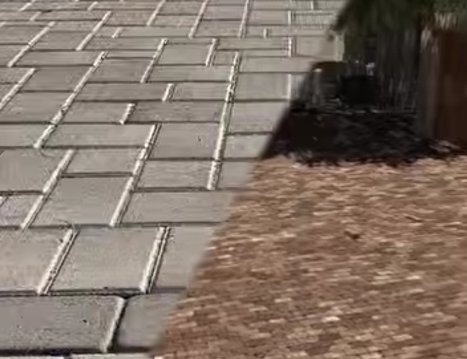
Paver driveways sink because of what's under the pavers, not the pavers themselves. When the base is too thin, the wrong material or never compacted properly, the weight of your cars pushes everything down into the soil over time. A driveway built as a full system, with the right base, a thin sand layer and the pavers working together, doesn't sink.
Here's the simple test. A concrete paver doesn't get thinner. If your driveway has dropped an inch in one spot, the paver didn't lose an inch. Something under it moved. That's why I always tell people to stop looking at the surface and start asking what was built underneath it. The pavers on top are just showing you where the problem is.
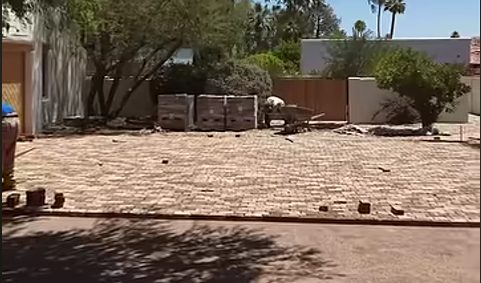
In Arizona, we put in a minimum of 4 inches of ABC under a driveway, then 1 inch of sand, then the paver. That's the build that holds a car for years. When a driveway sinks, one of those layers was usually skipped, shorted or done wrong, and most often it's the base, because once the pavers go on top nobody can see it. That's what makes it the easiest place to cut corners on a bid.
If the paver didn't change, what actually sank?
The base and the soil under it. Every time a car pulls in, its weight presses down through the pavers and the sand into the base. If the base can't spread that weight out, the soil below takes it in small, concentrated spots and slowly gives way.
Think about what a driveway carries. A vehicle sits on four small tire patches, and every time you pull in and out, that weight punches down into the surface. A good base takes that load and spreads it across a wide area, so the soil underneath barely feels it. A weak base passes it straight through. That's where ruts and dips come from, and it's why they show up in the same spots every time: where the tires turn, where you stop and where you park.
The sand layer can play a part too. It's there to give the pavers a level bed and to lock into the joints, not to hold the driveway up. If someone uses a thick layer of sand to make up for a base that isn't flat, that sand shifts under load and the pavers go with it. We wrote more about that in why the sand under your pavers matters.
What base should be under a paver driveway in Arizona?
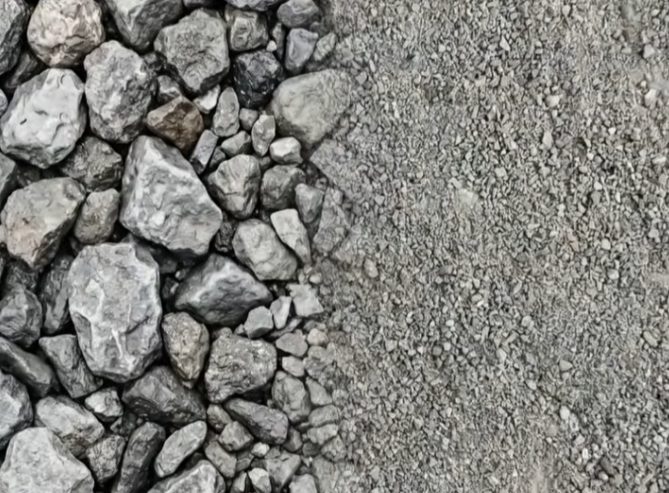
ABC, aggregate base course, at least 4 inches compacted under a driveway, wet down and compacted in lifts. If a contractor plans to use quarter minus or decomposed granite as the base, that's a red flag. Those materials don't have the structure to carry a car.
ABC isn't one size of rock. It's a graded mix that runs from about three quarter inch pieces down to fines. The bigger rock locks together and carries the weight, and the fines fill the gaps so there's nowhere for the material to shift. Wet it down, compact it in lifts with a heavy compactor, and it gets hard enough that you barely leave a footprint on it. We go deeper into the material in the foundation every strong driveway needs.
Notice the word compacted. Four inches of loose rock is not four inches of base. Once you compact loose material properly, you lose height, which means a crew that dumped 4 inches and screeded it flat never put down enough to begin with. That's one of the most common shortcuts I see, and it's invisible until the driveway starts moving a couple of years later.
Why is a paver driveway a system and not just pavers?
Because each layer depends on the one below it. The base carries the load, the sand gives the pavers a level bed and locks the joints, and the pavers spread the weight across the surface. Get one layer wrong and the other two can't save it.
This is the part I want every homeowner to understand. "It's not just pavers, and it's not just ABC. It all has to go together." A premium paver on a bad base still sinks. A great base with sloppy sand still leaves you with pavers that rock. You're not buying a paver. You're buying the whole build, from the ground up.
That's also why you can't judge a driveway on installation day. Every driveway looks good when it's brand new. The joints are tight, the color is fresh and the lines are straight. Whether the system was built right shows up years later, which is why we talk about why some paver driveways last 30+ years and others don't. If you do it right, you won't have sinking.
How can you tell if your paver driveway is sinking?
Look for dips near the garage, low spots where the tires sit, pavers that rock when you step on them, joints that are opening up, and water that puddles where it used to drain. Any one of those means something underneath is moving.
Walk your driveway slowly, especially the first few feet in front of the garage and the path your tires take in and out. Lay a long straightedge or a level across the low spots. Step on the pavers in those areas and see if any of them move. Then hose it down and watch where the water goes. Water sitting in a dip tells you the surface has dropped below where it was built.
Pay attention to the edges too. If the pavers at the side of the driveway are spreading out or tipping, the edge restraint may have failed, and the pavers in the middle start to drift. Drainage matters as well. Water that runs under a driveway instead of off it softens what's underneath, which speeds up sinking. Our post on where water should drain on a paver driveway covers how it's supposed to flow.
Can a sinking paver driveway be fixed without replacing it?
Sometimes a small, isolated low spot can be lifted, re-based and reset. But if the base was built wrong across the whole driveway, the real fix is to pull the pavers, rebuild the base correctly and reset them. Patching a bad base just moves the problem.
The good news about pavers is that they can come up and go back down. That's one of their biggest advantages over poured concrete. If one area dipped because of a leak or a soft spot, we can pull those pavers, fix what's underneath, compact it and set them back. Done right, you won't see where the repair was.
But if the whole driveway was built on a thin or loose base, lifting one spot at a time is a losing game. You fix the dip by the garage and a new one shows up by the street. At that point, the honest answer is to take it up and rebuild the base the way it should have been done the first time. You pay for the base either way. Doing it right once is the cheaper version.
What happens when you call Stone Creations about a sinking driveway?
We come out, walk the driveway with you, check where it's sinking and why, and tell you honestly whether it's a spot repair or a base problem. If it needs a rebuild, we'll explain exactly what we'd put under it and how deep.
On the visit, we look at the low spots, the edges, the drainage and how the driveway meets the garage and the street. We'll tell you what we think is going on underneath and what it would take to fix it. If you're planning a new paver driveway instead, we'll walk you through the build: the ABC, the compaction, the sand and the paver, so you know what you're paying for before you sign.
I'm John Traynor, and Stone Creations is family-owned and pavers-only. We're licensed and insured under Arizona ROC #154361 and an award-winning ICPI Arizona Chapter contractor, and I serve on the board of the Southwest Hardscapes Association. Read more about me, see our paver driveway work and finished jobs like this curved cobble driveway with a soldier band. For a ballpark, try our pricing page or online estimator, then call (480) 861-0699 or contact us. We're based in Scottsdale and build driveways across Paradise Valley, Phoenix, Mesa, Gilbert, Chandler and Queen Creek.
Frequently Asked Questions About Paver Driveway Sinking in Scottsdale
How much does it cost to fix a sinking paver driveway in Scottsdale?
It depends on whether it's one low spot or the whole base, how big the driveway is and whether the pavers can be reused. Our pricing page and estimator give you a starting range for a paver driveway. After we walk it, we'll give you a real number.
How long should a paver driveway last before it sinks?
A paver driveway built on a proper base shouldn't sink at all. If you're seeing dips in the first few years, that points to the base, the sand layer or drainage, not normal wear. Built right, a paver driveway can last decades.
Is a sinking paver driveway a safety problem?
It can be. Rocking pavers and dips are trip points, and water that sits in low spots can make the surface slick. Small dips also tend to grow, so it's worth having it looked at before it turns into a bigger repair.
Do Arizona heat and monsoons cause pavers to sink?
Heat alone doesn't sink a well-built driveway. Water is the bigger risk. If monsoon runoff gets under the pavers and has nowhere to go, it can soften what's underneath and speed up settling, so drainage gets planned before the pavers go down.
Can you reuse my existing pavers if the base needs to be rebuilt?
Often, yes. Pavers can be pulled, set aside and reset on a new base. We'll look at their condition and tell you whether reusing them makes sense or whether new pavers are the better choice.
What paver services does Stone Creations offer?
We're pavers-only. We install paver driveways, paver patios, paver pool decks, paver walkways and travertine across Scottsdale and the Valley. We don't do turf, irrigation or general landscaping.
How do I get started?
Call (480) 861-0699 or use our contact page, and tell us what your driveway is doing. We'll set up a time to walk it with you and tell you honestly what's going on underneath.
Curious what your project might cost?
Get an instant ballpark with our free estimator tool, no contact info required.